When the Signal Saved Everything: Real People, Real Rescues, and the iPhone 15 Feature That Made It Possible
We've spent a lot of time at NewPhone15 poking at Emergency SOS via Satellite from every angle — suburban parking lots, rural backroads, mountain passes with zero bars. We've written about coverage gaps, timing quirks, and the strange experience of watching your phone ping a satellite like it's something out of a sci-fi movie.
But here's the thing: all of our testing is, at its core, artificial. We chose the conditions. We had backup plans. Nobody was actually bleeding.
So this time, we did something different. We tracked down the people who used this feature when it wasn't a test — when it was the only option left. We talked to survivors, their families, and the search-and-rescue teams who showed up because a satellite decided to cooperate at exactly the right moment.
What we found was humbling.
The Hiker Who Ran Out of Trail and Nearly Ran Out of Time
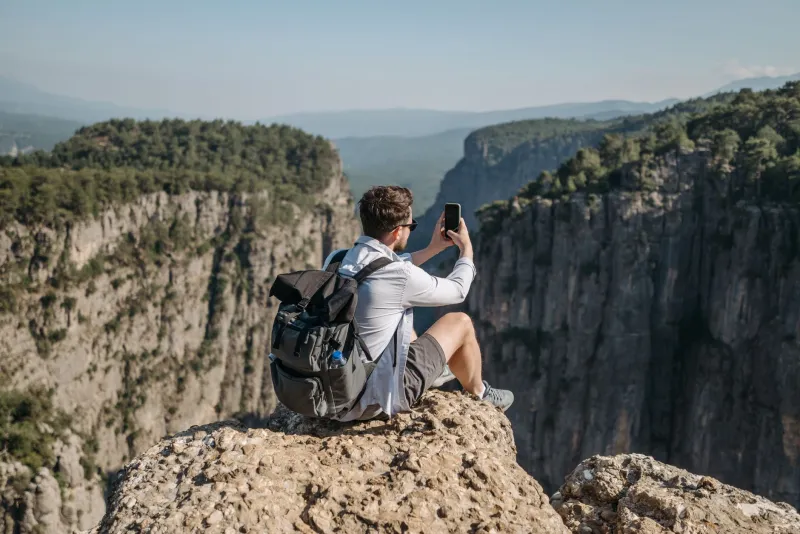
Last spring, a 34-year-old trail runner named Marcus was doing a solo loop in a remote section of the Ozarks — a route he'd done before, but not alone. About seven miles in, he went down hard on a root-covered descent and felt something give way in his ankle. Not a sprain. A break.
He had no cell signal. His hiking partner had dropped out the day before. The trailhead was nearly four miles back on terrain he couldn't walk.
He pulled out his iPhone 15, remembered the satellite SOS feature existed — he'd never actually tried it — and followed the prompts. The process took a few minutes, which he described as "the longest three minutes of my life." But the message went through. Local search and rescue had his GPS coordinates within the hour. He was out by sundown.
"I'd honestly kind of forgotten that feature was even on my phone," he told us. "I bought the phone for the camera. I had no idea it was going to be the reason I got home."
Search and rescue coordinator Janet Flores, who led the team that found Marcus, put it bluntly: "Without that coordinate ping, we're searching a seven-mile stretch of dense forest in fading light. That's an overnight operation, minimum. The satellite message cut that down to a forty-minute hike."
A Car Off the Road, a Family Inside, and a Feature Nobody Expected to Use
In February, a family of four drove off an icy mountain road in Colorado during a whiteout. The vehicle slid off the shoulder and down an embankment — far enough that it wasn't visible from the road above. The father, Daniel, had a broken collarbone. His wife was unconscious for several minutes. Their two kids, ages nine and twelve, were shaken but uninjured.
The twelve-year-old, Priya, grabbed her dad's iPhone 15 and activated Emergency SOS via Satellite. She'd seen her dad demonstrate it once, casually, a few months earlier. She remembered just enough.
Colorado State Patrol received the alert with their location. Responders reached the family in under ninety minutes — fast enough that Daniel's wife, who had a concussion, received treatment well within the window that matters most for head injuries.
"She walked me through the steps," Daniel said of his daughter. "I was in too much pain to think straight. She just did it. Twelve years old."
The responding trooper, who asked us not to use his name, said situations like this are becoming more common. "We're seeing these satellite alerts come in a few times a month now in our district. A year ago, that number was basically zero. The technology is reaching people who actually need it."
What Search and Rescue Teams Are Actually Seeing
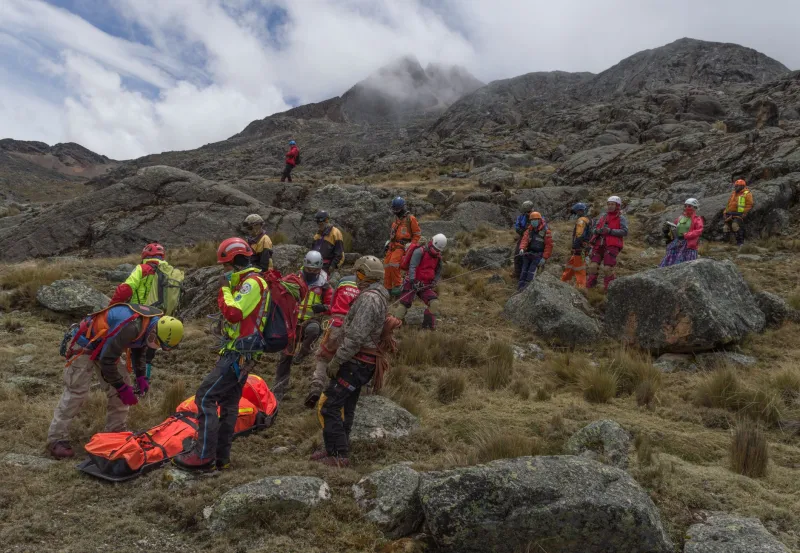
We spoke with members of three separate search-and-rescue organizations across the Mountain West — volunteers and professionals who operate in some of the country's most challenging terrain. The consensus was consistent: satellite-connected distress signals, whether from dedicated devices or iPhones, have meaningfully changed how quickly they can respond.
But they were also honest about the learning curve.
"The biggest issue we still see is people not knowing the feature exists," said one SAR volunteer in Utah. "They've got an iPhone 15, they're in trouble, and they never even try it because they assume their phone is useless without a cell signal. That assumption costs time."
Several rescuers also noted that the quality of the location data matters enormously. Unlike a vague 911 call that puts someone "somewhere near the trailhead," a satellite SOS from an iPhone 15 delivers GPS coordinates. That specificity — knowing someone is at a particular latitude and longitude rather than somewhere in a ten-square-mile wilderness area — can be the difference between a two-hour rescue and a two-day search.
The Limits Are Still Real
None of the people we talked to suggested this technology is perfect or foolproof. Marcus, the trail runner, pointed out that if he'd been in a dense canyon or under heavy tree cover, the satellite connection might have taken significantly longer — or failed to connect at all. Priya's family was lucky the car landed in an open enough area for the signal to work.
Apple's Emergency SOS via Satellite requires a clear view of the sky. It works best in open terrain. The message relay takes time. And none of that changes the fact that the best safety plan still involves telling someone where you're going before you leave.
But here's what we kept coming back to after all these conversations: the feature works often enough, in enough real situations, that it has already changed outcomes for actual people. Not in our parking lot tests. In the actual moments that count.
The Phone You Already Have Might Be More Capable Than You Think
We started this piece as a reporting project. We ended it feeling like we owe it to our readers to say something plainly: if you own an iPhone 15 and you spend any time in areas with spotty or nonexistent cell coverage, please go find the Emergency SOS via Satellite option in your settings right now. Walk through the demo. Understand how it works before you need it.
Marcus didn't know the feature existed until he was sitting on a forest floor with a broken ankle. Priya knew because her dad had shown her once, almost as an afterthought.
The technology is only as useful as your awareness of it. And based on the stories we heard, that awareness could be worth everything.
NewPhone15 reached out to Apple for comment on the Emergency SOS via Satellite program. The company declined to provide specific rescue statistics but confirmed the feature remains active and free for iPhone 14 and 15 users through their service agreement.