30 Days Without a Case: What Going Naked With the iPhone 15 Really Costs You
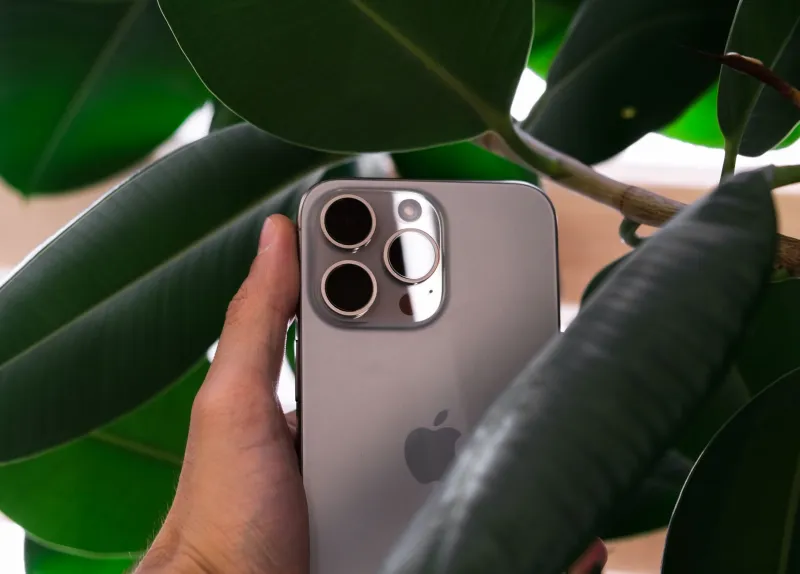
Let's be real — Apple didn't spend all that time bragging about aerospace-grade titanium just so you'd bury the phone in a thick rubber sleeve the second you opened the box. The iPhone 15 lineup is legitimately the best-looking hardware Apple has shipped in years, and the idea of covering it up feels almost criminal. So we decided to test the obvious question: what actually happens if you just... don't?
For 30 consecutive days, our editorial team ran a mix of iPhone 15 and iPhone 15 Pro units completely naked. No cases, no skins, no MagSafe wallet doubling as a bumper. Just the phone, your pocket, and whatever the world decided to throw at it.
Here's what we learned.
The First Week: False Confidence Is Real
The first few days of going caseless feel genuinely liberating. The phone is lighter, thinner, and — honestly — a pleasure to hold. The titanium on the Pro model has this matte warmth that a silicone case completely murders. You start to understand why people do this.
But around day three, something shifts in your brain. You start noticing the phone more. You set it down differently on restaurant tables. You hesitate before tossing it into the same pocket as your keys. That hyper-awareness is your nervous system doing math it never had to do when the phone lived inside a $50 case.
One of our writers described it perfectly: "I felt like I was babysitting a very expensive puppy."
That psychological load is real, and it's worth factoring into your decision before you go full minimalist.
What Actually Got Damaged — And What Didn't
After 30 days across three devices and four testers, here's the damage report:
Micro-scratches on the back glass: Every single device picked them up. Not dramatic gouges — more like the kind of fine surface scuffing you only notice when light hits it at the right angle. The iPhone 15 (non-Pro) uses the same textured matte glass as last year, and it showed wear faster than the titanium-framed Pro models.
The titanium frame: Surprisingly resilient. We got a few minor scuffs near the volume buttons where the phone slid across a wood desk, but nothing that looked alarming. The brushed finish on the Pro actually does a decent job of hiding light contact marks — better than the polished stainless steel on older models ever did.
The ceramic shield front: Zero issues. Not a single crack or meaningful scratch across any device. That's not a surprise given Apple's claims, but it's worth confirming.
One genuine incident: A testers's iPhone 15 (standard model) took a hip-height drop onto a concrete sidewalk outside a CVS in Chicago. The result? A small but visible chip on the lower-left corner of the aluminum band — not titanium on that model — and a hairline scuff on the rear glass. No cracked screen, no functional damage. But the cosmetic hit was permanent.
The Pocket Problem Nobody Talks About
Here's the thing case manufacturers don't advertise: cases don't just protect your phone from drops. They protect it from you. Specifically, from the constant micro-friction of living in your pocket alongside cards, coins, receipts, and whatever else Americans routinely carry.
Over 30 days, the most consistent damage vector wasn't drops — it was pockets. The rear glass on every device showed the kind of fine surface wear consistent with repeated contact with fabric and other objects. It's invisible at normal viewing distances, but it accumulates.
If you keep your phone in a dedicated phone pocket (or you're one of those people who carries a bag), this matters less. If you're a jeans-pocket person who also carries a MetroCard and a loyalty card for every coffee chain in existence, it matters quite a bit.
Does It Affect Resale Value?
This is where the math gets uncomfortable. We ran a quick comparison on a few resale platforms — Swappa, Back Market, and a couple of local Facebook Marketplace listings — looking at price differences between "excellent" and "good" condition iPhone 15 units. The spread ranged from $40 to $80 depending on storage tier.
A decent case costs $30 to $60. Do that math.
If you plan to trade in or resell your iPhone 15 before the next upgrade cycle, a case isn't a luxury — it's a depreciation hedge. That reframe alone might change how you think about the whole debate.
Who Should Actually Go Caseless
We're not here to tell you that skipping a case is always wrong. For some people and some use cases, it genuinely makes sense:
- Desk workers who rarely leave the office. If your phone mostly lives on a clean surface and comes home in a bag, the risk profile is totally different from someone running job sites or commuting on the subway.
- People who upgrade every year. If you're trading in at launch regardless of condition, minor cosmetic wear becomes largely irrelevant.
- Titanium Pro owners specifically. The Pro's frame held up noticeably better than the standard model's aluminum. If you're going caseless, at least do it with the hardware that's built for it.
For everyone else — especially if you're on the standard iPhone 15, have a history of drops, or plan to sell before buying the iPhone 16 — the case math still works in your favor.
The Verdict After 30 Days
Apple's titanium frame is genuinely impressive, and the iPhone 15 lineup is more durable than its predecessors in real, measurable ways. But "more durable" isn't the same as "invincible," and 30 days of real-world use proved that the phone still accumulates wear without protection.
The bigger surprise was the psychological tax. Going caseless demands a level of constant low-grade attention that adds up over a month. Whether that tradeoff is worth the aesthetic payoff is genuinely personal — but at least now you know it's a real tradeoff, not just an imaginary one.
If you want to try it, go for it. Just don't say nobody warned you about the CVS sidewalk.