MagSafe vs. the Competition: We Snapped, Charged, and Accessorized Our Way to an Honest Answer
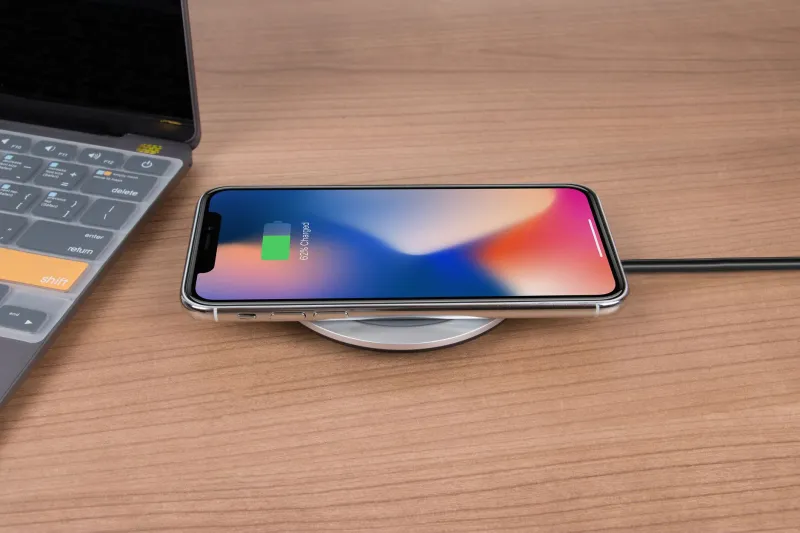
There's something undeniably satisfying about slapping an iPhone 15 onto a MagSafe charger and hearing that little magnetic snap. Apple has leaned hard into that tactile moment — it's basically a marketing sound effect at this point. But here's the honest question: does MagSafe actually deliver beyond the snap, and how does it stack up against what Samsung, Google, and others are doing in the wireless charging space? We spent a few weeks putting all of it through genuinely real-world paces to find out.
The Alignment Game
Let's start where most people actually notice a difference — just getting the charger to connect properly without staring at it.
MagSafe's magnetic ring on the iPhone 15 is legitimately good at one-handed placement. Toss the phone toward the puck on your nightstand at 11 PM half-asleep, and it mostly finds its mark. The magnets guide the coils into alignment automatically, which means you're not waking up to a dead phone because you were off by half an inch. That's a real, practical win.
Samsung's Galaxy S24 series supports Qi2, the newer wireless charging standard that actually borrows its magnetic alignment ring concept directly from MagSafe — Apple helped develop the spec. So on paper, a Qi2-certified charger should give you similar snap-and-go behavior with a Samsung device. In practice, the magnetic pull on the S24 Ultra felt noticeably weaker than on the iPhone 15. It connected, sure, but it didn't grab the same way. You could nudge the S24 off-center with a light bump on the desk; the iPhone 15 resisted that same nudge more confidently.
Google's Pixel 8 supports standard Qi wireless charging but doesn't include any magnetic alignment hardware. That means you're back to the old-school "hope you landed it right" method. Frustrating? A little. Dealbreaker? Depends on how much you value that one-handed drop-and-charge move.
Charging Speeds: Where the Story Gets Complicated
Here's where Apple takes a hit it probably doesn't love talking about. MagSafe on the iPhone 15 tops out at 15W — but only when you're using Apple's own certified MagSafe charger or a certified third-party puck. Plug in a generic Qi charger and you're dropping to 7.5W. That ceiling is real, and it matters.
Meanwhile, Samsung's Galaxy S24 Ultra supports up to 15W over Qi2 as well, but its wired fast charging blows past everything at 45W. The Pixel 8 does 23W wirelessly through its proprietary fast wireless charging, which technically beats MagSafe's ceiling. Neither Android flagship is waiting around for Apple to raise its wireless speed limits.
In day-to-day use, the 15W MagSafe kept the iPhone 15 topped off fine during a typical overnight charge or a desk session. But if you're trying to grab a meaningful charge in 20 minutes before heading out? MagSafe isn't your hero. A USB-C cable is. That's a real limitation Apple still hasn't addressed, and it's worth naming plainly.
The Accessory Ecosystem: Apple's Biggest Actual Advantage
Okay, here's where MagSafe genuinely earns its reputation — not for charging speed, but for the sheer volume of stuff that attaches to it.
Walk into any Best Buy or Target in the US and the MagSafe accessory wall is substantial. Wallets, cases, mounts, battery packs, PopSockets, car mounts, desk stands — the ecosystem is deep and it's been growing since 2020. Third-party brands like Anker, Belkin, Peak Design, and Moment have all invested heavily in MagSafe-compatible gear, and the quality ceiling is genuinely high. Peak Design's MagSafe travel tripod mount, for instance, is the kind of accessory that makes you wonder how you lived without it.
Samsung has magnetic accessories too, but the ecosystem is thinner. Qi2 is newer, and while more brands are building for it, you're still not seeing the same density of options at retail. Google's Pixel 8 accessory market is even more sparse on the magnetic front — there are cases, sure, but the "snap something to the back of your phone" habit hasn't caught on the same way for Pixel users.
For iPhone 15 owners, the MagSafe ecosystem genuinely changes daily habits. Car mount usage went up noticeably in our testing once we switched from a clamp-style holder to a MagSafe disc on the dash vent. One-handed mounting while driving is safer and faster. That's a tangible benefit that has nothing to do with charging speed.
Fragmentation: Android's Messy Reality
One thing that doesn't get talked about enough in these comparisons is ecosystem fragmentation on the Android side. Qi2 is the new standard and it's promising, but not every Android flagship supports it yet. Some support proprietary fast wireless standards that only work with the brand's own charger. Some support older Qi. Some support both. Keeping track of what works with what requires a spreadsheet you definitely don't want to maintain.
Apple's approach is closed and controlled, which is genuinely annoying when you want cheaper third-party options — but it also means every MagSafe accessory either works or it doesn't, and the certification process keeps most garbage off the market. There's a real consumer protection value in that, even if it costs you a few extra dollars at checkout.
So Which System Actually Wins?
It depends on what you're optimizing for, honestly.
If raw wireless charging speed is your priority, MagSafe isn't the leader. The Pixel 8 edges it out wirelessly, and Samsung's overall charging story (wired and wireless combined) is faster. Apple's 15W ceiling is starting to feel a little dated.
But if you care about reliable one-handed alignment, a deep and well-supported accessory ecosystem, and a consistent experience across chargers and mounts — MagSafe is still the most cohesive system available in the US market. The snap is real, the accessories are plentiful, and the experience holds up in the ways that actually affect daily life.
Android is catching up, especially with Qi2 gaining traction. But right now, if the back of your phone is going to become a mounting platform for your whole life — wallet, car mount, battery pack, tripod — the iPhone 15 and MagSafe give you the most to work with. That's not a small thing.