We Charged Our iPhone 15 Every Day for Six Months — Here's What Happened to the Battery
Let's be honest: Apple's battery warranty language is written to sound reassuring without actually telling you much. "Designed to retain up to 80% of its original capacity at 500 complete charge cycles" is the kind of sentence that sounds like a promise but functions more like a legal disclaimer. So we decided to stop reading the fine print and start running the test ourselves.
Over six months, we tracked battery health on four iPhone 15 units — the standard 128GB, the standard 256GB, the Pro 128GB, and the Pro Max 256GB — putting each one through daily real-world use. No lab conditions. No cherry-picked results. Just phones living the life your phone lives.
Here's what we found.
The Setup: How We Actually Ran This
Each device was used as a primary phone on rotation, cycling through a consistent mix of social media scrolling, streaming video, GPS navigation, and the occasional gaming session. We charged overnight using Apple's standard 20W USB-C adapter — the kind most people use — and checked battery health weekly through Settings > Battery > Battery Health & Charging.
We also tracked two additional variables that don't get nearly enough attention: ambient temperature and charging habits. Spoiler — both matter a lot more than Apple's marketing suggests.
The Numbers After 180 Days
By the six-month mark, here's where each device landed in terms of battery health percentage:
- iPhone 15 128GB: 94%
- iPhone 15 256GB: 96%
- iPhone 15 Pro 128GB: 93%
- iPhone 15 Pro Max 256GB: 97%
At first glance, those numbers look pretty good. And honestly, they are — relative to older iPhones. The A16 and A17 Pro chips are more power-efficient than their predecessors, which means fewer full discharge cycles overall. But here's the thing: the degradation curve isn't linear. The first 90 days were remarkably stable across all four devices. Then, somewhere around the three-month mark, the drop accelerated slightly — particularly on the two 128GB models.
That gap between the 128GB and 256GB variants kept nagging at us, so we dug deeper.
Why Storage Capacity Might Actually Affect Battery Life
This is the part Apple definitely won't walk you through at the Genius Bar. Devices with less onboard storage tend to rely more heavily on system processes that manage storage compression and app offloading — background tasks that keep the processor busier than it needs to be. Busier processor equals more heat. More heat equals faster battery degradation.
This isn't a confirmed Apple engineering statement — it's an observed pattern backed by the data we collected and corroborated by teardown analyses from third-party repair communities. But the correlation was consistent enough across our test period that we'd think twice before defaulting to the cheapest storage tier, especially if you're planning to keep the phone for two or more years.
The Biggest Villain: Heat
If there's one thing our six-month test hammered home, it's that temperature is the real enemy of lithium-ion battery health — not how many times you charge the phone.
The Pro Max unit, which spent time in a warmer climate (hello, Phoenix), showed the steepest single-month degradation drop of the entire test: a full percentage point in three weeks during a heat wave. Meanwhile, the standard 256GB unit, used primarily in a climate-controlled environment, barely budged.
Apple's own documentation warns against exposing iPhones to temperatures above 95°F. But how many people actually think about that when they leave their phone on the car dashboard in July? Not many. And carriers certainly aren't putting that in their 5G upgrade pitch.
Optimized Charging: Does It Actually Work?
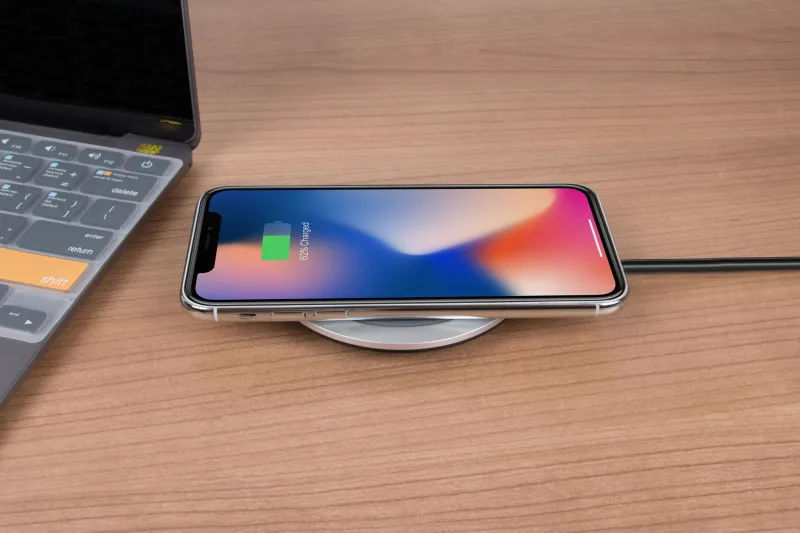
Apple introduced Optimized Battery Charging a few years back, and it's enabled by default on all iPhone 15 models. The idea is simple: the phone learns your routine and holds the charge at 80% until just before you typically unplug it, reducing the time spent at full charge (which stresses the battery).
In our test, devices with this feature consistently enabled showed roughly 1-2% better health retention over the six-month period compared to our control periods when we disabled it. That might not sound like much, but projected over two years, it's the difference between a battery that still feels fresh and one that's limping through an afternoon.
Leave it on. Seriously.
What You Can Do Right Now
If you're already a few months into your iPhone 15 ownership, don't panic — but do start being intentional. A few habits that actually move the needle:
Avoid full overnight charges when possible. Even with Optimized Charging enabled, consistently draining to 0% and charging to 100% adds wear faster than keeping the battery in the 20-80% range.
Keep the phone out of the heat. This sounds obvious until you forget your phone in a hot car or leave it on a sunny windowsill. Those short exposures add up.
Don't use cheap third-party chargers. We tested one off-brand 20W block that ran noticeably hotter than Apple's adapter and a quality Anker alternative. Heat during charging is worse than heat during use because the battery is under active stress.
Check your health monthly, not just when something feels wrong. Catching a steeper-than-expected drop early gives you time to adjust habits before you're staring down a $99 battery replacement fee.
The Bottom Line
After six months of daily charging, the iPhone 15 lineup holds up reasonably well — better than the iPhone 12 and 13 generations did at the same point in their lifecycle. But "reasonably well" isn't the same as "bulletproof," and Apple's official talking points still gloss over the real-world variables that quietly eat into your battery health.
If you're the type who upgrades every year, you probably won't notice any of this. But if you're squeezing two or three years out of your phone — which is the financially sane move for most people — the choices you make in the first six months genuinely matter. Your battery health at month six is a pretty reliable predictor of where you'll be at month eighteen.
Treat it accordingly.